Loading your experience...
Loading your experience...
Data analytics has evolved from a specialized technical function into a core business capability. Organizations today generate massive volumes of data across systems, teams, and customer interactions. However, having access to data does not automatically lead to better decisions. The real advantage comes from the ability to analyze data accurately, quickly, and in context.
Data analytics helps organizations understand what is happening across the business, why certain outcomes occur, and what actions to take next. From executive strategy to frontline operations, analytics enables teams to move away from intuition-based decisions toward insight-driven outcomes. As markets become more competitive and change accelerates, the ability to convert data into actionable intelligence has become a strategic necessity.
This guide explains what data analytics is, the main types of analytics, common tools and platforms, and how businesses use analytics to improve performance, efficiency, and growth. It also explores why many analytics initiatives fail and what organizations need to build a strong analytics foundation.
Modern businesses operate in an environment defined by speed, complexity, and constant change. Customer expectations shift rapidly, supply chains are increasingly dynamic, and competitive pressure is relentless. In this context, decisions made without reliable data often lead to missed opportunities or costly mistakes.
Data analytics enables organizations to identify patterns, trends, and signals hidden within raw data. Instead of reacting after outcomes occur, analytics allows teams to anticipate change and respond proactively. Leaders can detect risks earlier, optimize operations continuously, and make confident decisions based on evidence rather than assumptions.
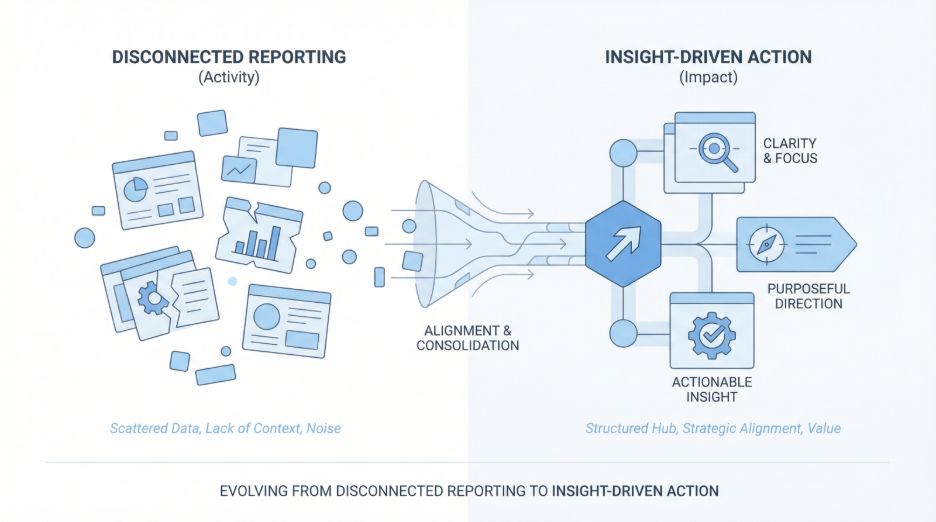
Despite heavy investment in data tools, many organizations struggle to translate analytics into real business impact. Reports and dashboards exist, but insights fail to drive action. Understanding what data analytics truly involves is the first step toward closing this gap.
Data analytics is the process of examining raw data to uncover patterns, insights, and information that support decision-making. It involves collecting data from multiple sources, preparing and organizing it, analyzing it using analytical methods, and presenting the results in a form that people can understand and act on.
At its core, data analytics answers critical business questions such as:
Raw data on its own is often fragmented and difficult to interpret. Analytics provides the context that transforms data into meaningful insight and reduces uncertainty in decision-making.
Reporting focuses on presenting historical data, usually through static summaries or visualizations. While reporting is essential for visibility, it typically answers only one question: what already happened.
Data analytics goes beyond reporting by:
For example, a report may show that sales declined last quarter. Data analytics investigates why sales declined, which segments were impacted, and what changes could reverse the trend. This shift from observation to insight is what elevates analytics from a support function to a strategic capability.
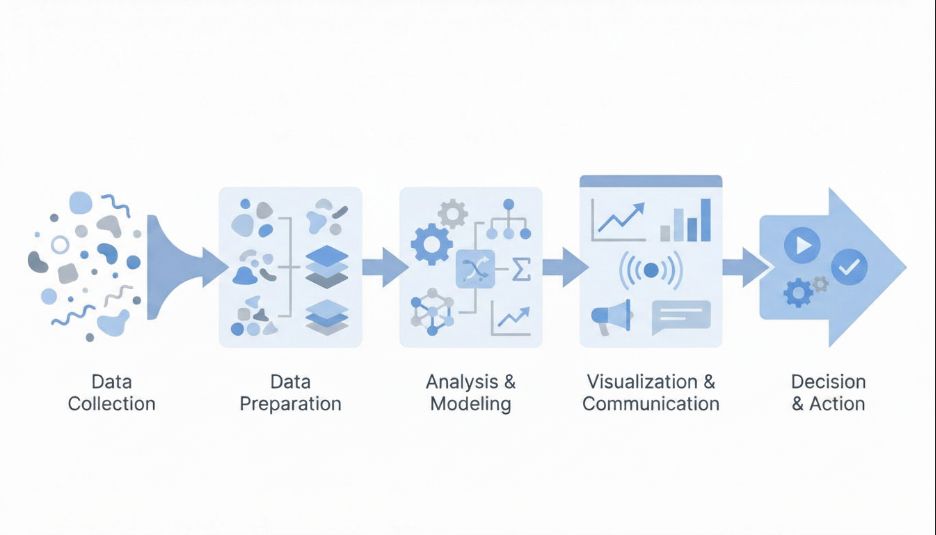
Although tools and technologies vary, data analytics generally follows a structured process.
The typical flow includes:
This process is iterative. As new data becomes available or business questions evolve, analytics continuously adapts.
Data analytics is commonly categorized into four main types. Each type answers a different business question and supports a different level of decision-making. Mature analytics programs use all four types together rather than in isolation.
What question does it answer?
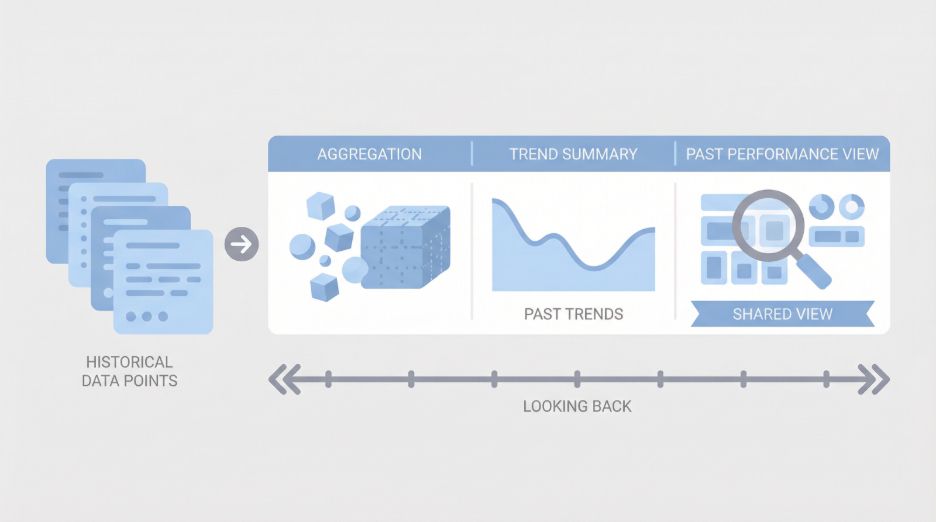
Descriptive analytics summarizes historical data to provide visibility into past performance. It focuses on aggregation, reporting, and trend identification rather than interpretation.
Descriptive analytics establishes a shared understanding of business performance and forms the foundation for deeper analysis.
What question does it answer?
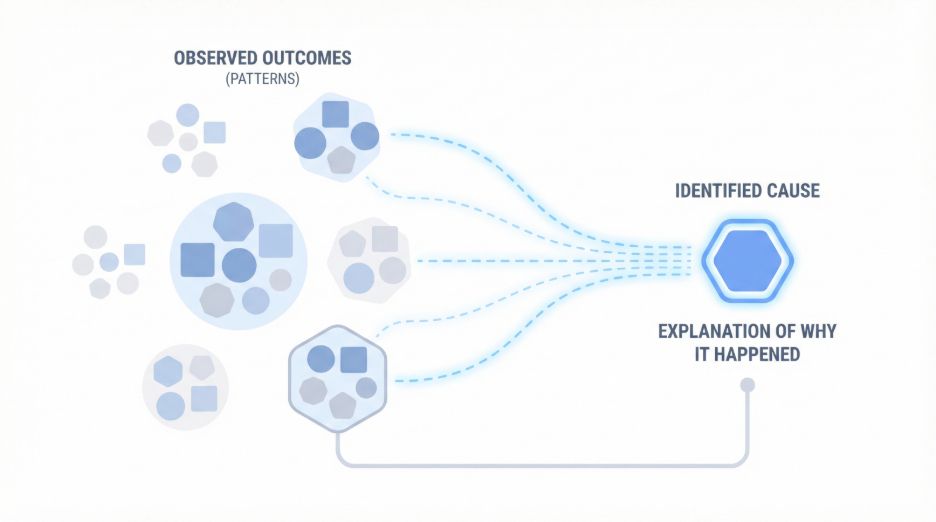
Diagnostic analytics examines data to identify causes behind observed outcomes. It looks for correlations, patterns, and contributing factors that explain changes in performance.
Diagnostic analytics helps organizations move from observation to explanation.
What question does it answer?
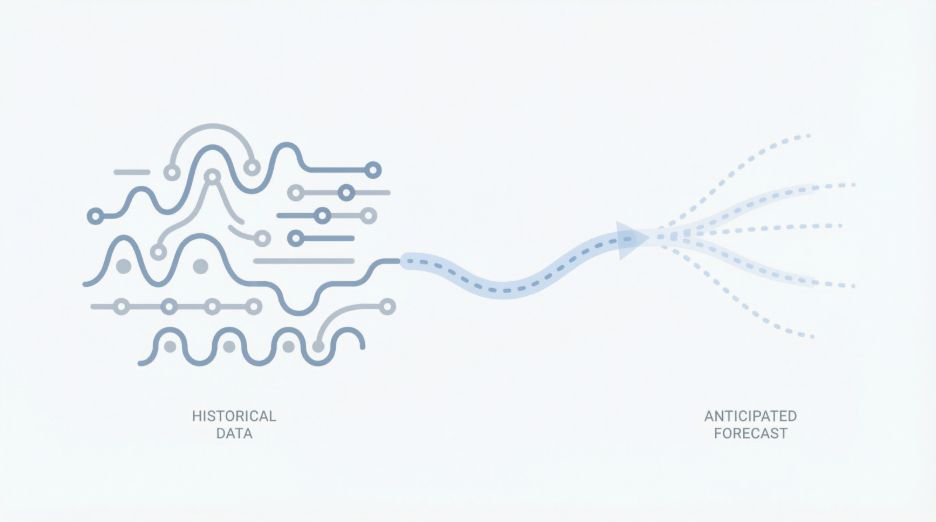
Predictive analytics uses historical data and analytical models to forecast future outcomes. It allows organizations to anticipate trends, risks, and opportunities before they materialize.
Predictive analytics supports proactive planning and informed decision-making.
What question does it answer?
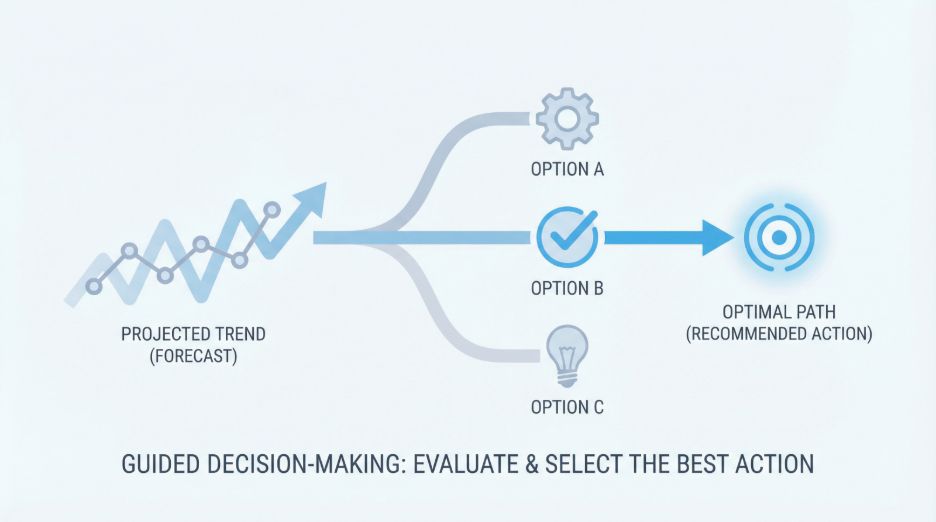
Prescriptive analytics evaluates possible actions and recommends the most effective course based on predicted outcomes. It often combines analytics with optimization techniques and business rules.
Prescriptive analytics enables organizations to act on insights with confidence.
How Is Data Analytics Different From Business Analytics and Data Science?
These terms are often used interchangeably, but they serve different purposes and audiences. Understanding the distinction helps organizations set realistic expectations and build the right capabilities.
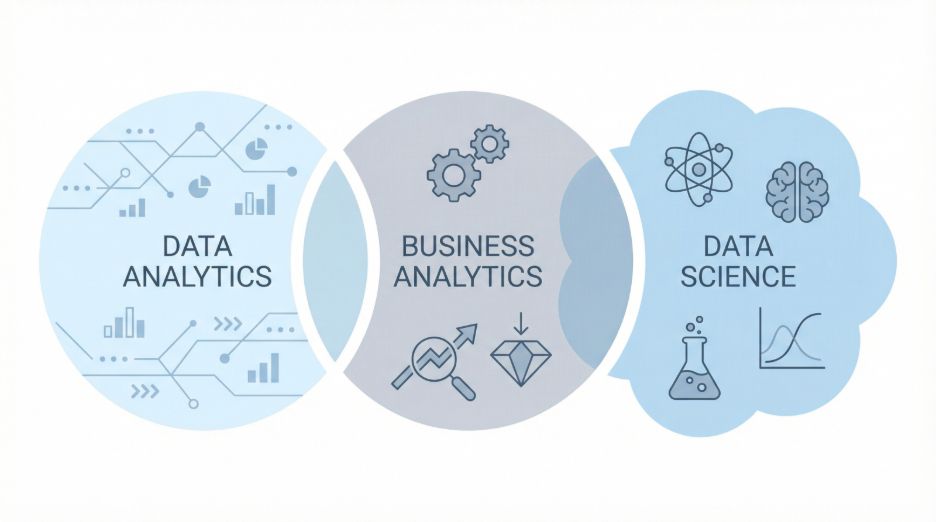
Data analytics focuses on analyzing data to generate insights that inform decisions. It is concerned with patterns, trends, and measurable outcomes.
Business analytics applies data analytics directly to business strategy and operations. It emphasizes decision-making, performance improvement, and measurable business impact.
Data science is more experimental and research-driven. It involves advanced modeling, machine learning, and algorithm development to discover new patterns or build predictive systems.
In practice, these disciplines overlap, but they play distinct roles within an organization.
In a mature organization:
Together, they create an analytics ecosystem that supports both day-to-day operations and long-term innovation.
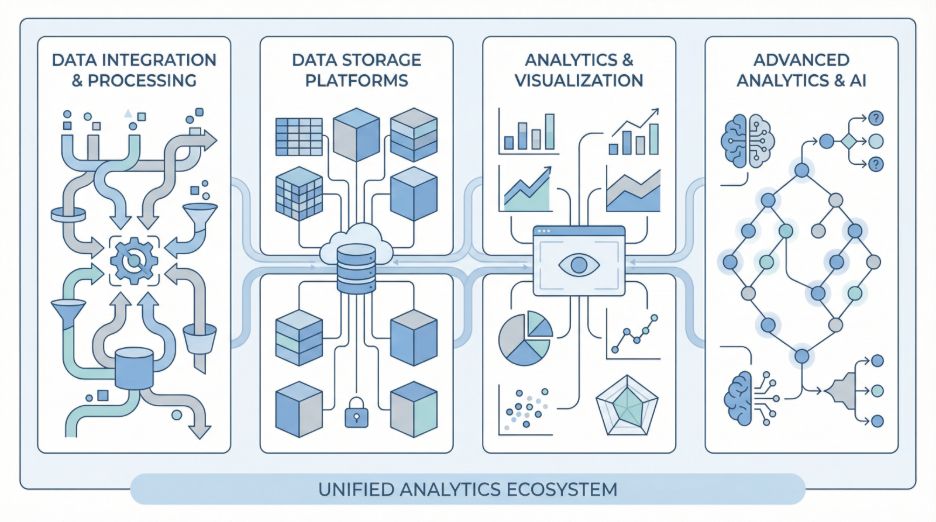
Data analytics tools help organizations collect, process, analyze, and visualize data. The right tools depend on scale, complexity, and business goals, but effective analytics platforms share a few common characteristics.
They should:
Most organizations use a combination of tools rather than a single platform.
These tools collect data from different systems and prepare it for analysis.
Typical examples include:
They ensure that data is clean, consistent, and available when needed.
Analytics relies on centralized data storage that can handle scale and variety.
Common platforms include:
These platforms form the foundation of modern analytics architectures.
These tools help analysts and business users explore data and interpret insights.
They typically support:
Well-designed visualizations improve understanding and encourage data-driven decisions across teams.
These platforms support predictive and prescriptive analytics.
They enable:
Advanced analytics tools are often used by specialized teams but increasingly influence business operations through embedded insights.
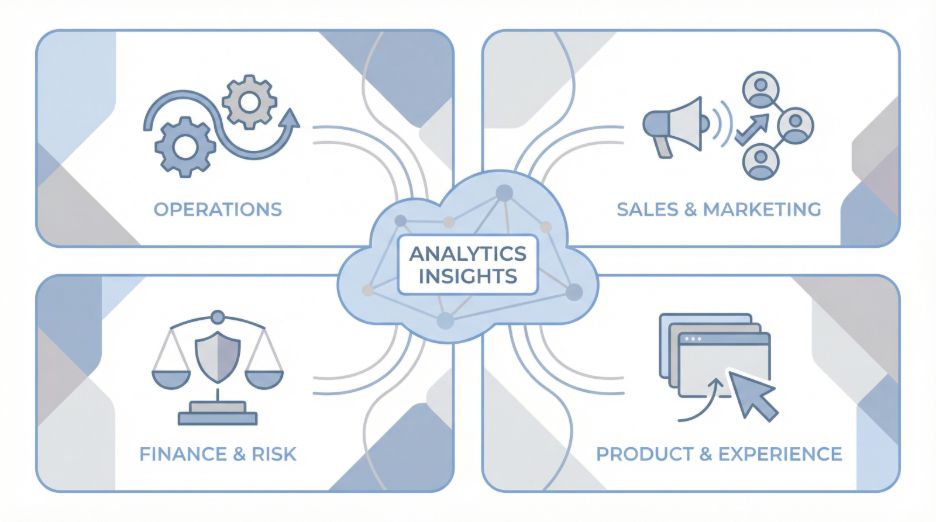
Data analytics delivers value across nearly every business function. The impact comes not from the data itself, but from how insights are applied to real decisions.
Analytics helps organizations improve efficiency, reduce waste, and identify bottlenecks.
Operational analytics enables continuous improvement rather than reactive fixes.
Customer-facing teams rely heavily on analytics to understand behavior and optimize engagement.
Analytics helps teams align messaging, timing, and channels with customer needs.
Financial teams use analytics to improve forecasting, manage risk, and ensure compliance.
Analytics improves financial control while enabling more strategic planning.
Product teams use analytics to understand how users interact with products and services.
Analytics ensures product decisions are grounded in real user behavior rather than assumptions.
Despite widespread investment, many analytics initiatives fall short of expectations. The challenge is rarely a lack of data or tools.
Without clear ownership and alignment, analytics outputs often go unused.
One of the most common problems is insight without execution. Reports may reveal trends, but if teams lack authority, context, or trust in the data, decisions do not change.
Analytics creates value only when insights drive action.
High-performing organizations treat analytics as a core capability rather than a side project.
Analytics maturity grows over time through consistent investment and leadership commitment.
Even the best analytics tools fail without cultural adoption. Teams must trust data, understand how to interpret insights, and feel empowered to act on them.
Analytics becomes transformative when it is embedded into everyday decision-making.
Artificial intelligence systems are only as effective as the data that feeds them. Data analytics prepares, validates, and contextualizes data so it can be used reliably by AI and machine learning models.
Analytics provides the structure and insight required to move from raw data to intelligent systems.
In modern enterprises, analytics and AI are deeply interconnected.
When combined, analytics ensures AI models remain accurate, explainable, and aligned with business objectives.
Digital transformation is not just about adopting new tools. It is about changing how decisions are made and how organizations respond to change.
Without analytics, transformation initiatives often lack direction and measurable impact.
Organizations that succeed with transformation treat analytics as an ongoing capability.
This feedback loop allows businesses to evolve continuously rather than relying on static plans.
As data volumes and speed increase, organizations are moving beyond batch reporting toward real-time insights.
This shift supports more agile and responsive business models.
Analytics is no longer limited to data teams. Self-service platforms allow business users to explore data directly.
Self-service analytics reduces bottlenecks and empowers teams to act faster.
Analytics is increasingly built into applications rather than delivered through separate dashboards.
As analytics becomes more contextual, it moves closer to everyday business actions.
As analytics adoption grows, governance becomes more critical.
Strong governance ensures analytics remains trustworthy and scalable.
Scalable analytics adapts as the organization grows, data volumes increase, and new use cases emerge.
This approach prevents analytics from becoming a bottleneck.
Technology alone does not create analytics maturity. Alignment between leadership, business teams, and technical teams is essential.
Alignment ensures analytics investments deliver sustained value.
Even with strong intent, analytics initiatives can fail due to avoidable mistakes.
Avoiding these mistakes requires discipline and strategic clarity.
The most successful analytics programs prioritize action.
Analytics becomes valuable when it changes behavior.
The future of data analytics points toward greater intelligence, automation, and accessibility.
Organizations that invest early in strong analytics foundations will be better positioned to compete.
Data analytics is no longer optional for modern enterprises. It is a foundational capability that supports decision-making, innovation, and long-term growth.
By understanding the different types of analytics, selecting the right tools, and aligning insights with business goals, organizations can move beyond reporting to real impact. As analytics continues to converge with AI and automation, its role will only grow in importance.
For enterprises navigating digital transformation, data analytics provides the clarity needed to act with confidence in an increasingly complex and data-driven world.